Short Film Script Example: A Complete Two-Character Story
Read a complete short film script example with two characters and one location. Study the scene headings, dialogue and ending, then outline your own short.
This short film script example follows a daughter trying to take one photograph with her father before he closes his portrait studio. The full story is below, followed by notes on the choices, scene headings and ending.
Out of Frame is an original fictional teaching example, drafted with AI assistance. It has two speaking characters and one location. It has not been filmed or timed, and it is not an output from VidBreak.
Contents: read the complete script, follow the story decisions, check the format, outline your own short.
Complete script: Out of Frame
ALICE, 29: wants a photograph with her father before the studio is emptied. She has brought an envelope of pictures he took of her.
THEO, 62: a portrait photographer closing his business. He keeps finding useful things to do behind the camera.
Complete screenplay
OUT OF FRAME
INT. PORTRAIT STUDIO - LATE AFTERNOON
A pale rectangle marks the wall where a sign used to hang. Two chairs remain. Everything else is in cardboard boxes.
THEO peels a strip of tape from the floor. Beneath it, the wood is several shades lighter.
ALICE sets a camera on the tripod he has just folded.
THEO
That goes in the blue case.
ALICE
After one picture.
She puts a chair on the last tape mark.
Theo reaches for the camera.
ALICE
You're sitting.
He checks the tripod's height instead.
THEO
Too low.
ALICE
I can see your whole head.
He raises it half an inch.
Alice's phone lights up beside an envelope of old photographs: KEY COLLECTION. TEN MINUTES.
She turns the phone face down.
Theo sits. Alice looks through the viewfinder.
ALICE
Hands wherever you like.
He puts them on his knees. Moves them to the chair. Crosses them. Uncrosses them.
THEO
Is that light still plugged in?
Before she can answer, he gets up to check.
The shutter clicks on the empty chair.
INT. PORTRAIT STUDIO - A FEW MINUTES LATER
Theo stands behind the camera. Alice holds the empty-chair picture up on its screen.
ALICE
Very natural.
He almost smiles.
THEO
Sit down. I'll show you.
She sits. He moves the chair into the light from the window. His hands settle on the camera controls.
THEO
Chin down a little.
Alice lowers her chin.
THEO
That's it.
He takes the picture. She comes over to look.
ALICE
Good. Now move over.
She brings the second chair beside the first.
Theo checks the time on her phone, then closes the blue case.
THEO
We should finish packing.
Alice opens the envelope. She lays three old prints on top of the case: a missing front tooth, a graduation gown, a rain-soaked birthday cake. Alice is in every one.
ALICE
These are the ones I found.
Theo picks up the birthday print.
THEO
You wouldn't bring it inside.
ALICE
I wanted the candles in the rain.
He studies the blurry edge of the picture.
THEO
My sleeve got in.
ALICE
I know. That's why I kept it.
She puts the prints back in the envelope, except that one.
Theo sets it down carefully. He starts wrapping the studio light's cable around his elbow.
Alice leaves the two chairs where they are.
INT. PORTRAIT STUDIO - DUSK
The studio light is packed. Window light falls across the chairs.
Alice sets a ten-second timer on the camera. She checks the frame, then puts her bag beside one chair.
THEO
You'll get the boxes in.
ALICE
They can be in.
She presses the shutter and walks to her chair.
The camera beeps.
Theo stands behind it. He reaches toward a control.
ALICE
Leave it.
He stops.
Another beep. Alice sits, looking toward him.
Theo puts the studio keys on the closed case.
He walks around the tripod and sits beside her. His chair lands half on a coil of packing paper. It rocks.
Alice catches his arm. He catches the chair.
The shutter clicks.
They stay there a moment.
At the camera, Alice checks the picture. She tips the screen toward Theo. We don't see it.
ALICE
We can do another.
Theo reaches for the camera. Instead of adjusting a dial, he switches it off.
THEO
Keep that one.
Alice puts the camera away.
Theo pockets the keys and lifts the chairs. Alice peels up the last tape mark. She rolls it into a ball and drops it into a box.
She tucks the birthday print into the envelope and follows him.
FADE OUT.
END
What changes in the story?
Alice's practical goal stays small: get a photograph with Theo. The obstacles come from something Theo knows how to do. He adjusts the tripod, checks a light and demonstrates a pose. Each useful action also gives him a reason to leave the chair.
The old prints explain why the photograph matters without introducing a second plot. Alice has plenty of pictures by her father. The sleeve in the birthday photograph is the closest she has brought to a picture with him. She keeps an image he considers flawed.
| Moment | Visible action | What it does |
|---|---|---|
| First attempt | Theo leaves the chair to check a light | Establishes how he avoids the picture |
| Counteroffer | He photographs Alice instead | Shows that he is comfortable when he controls the camera |
| New information | Alice keeps the print with his sleeve in it | Makes her preference concrete: his presence matters more than a clean image |
| Decision | He puts down the keys and walks around the tripod | Lets him choose to join her, without being dragged into place |
| Ending | He turns off the camera after the imperfect take | Resolves the dispute about whether to keep trying for a better photograph |
The empty studio creates a deadline through the key collection. Nothing needs to explode or arrive at the door. If Theo never sits down, they leave without the picture Alice wanted.
The final photograph stays offscreen. The scene resolves through Theo's decision to keep it. Showing a finished photo is an optional production choice, not something needed to understand the written ending.
How the script is formatted
Each scene heading identifies an interior, a specific location and a time. Action describes what can be seen or heard. A character cue identifies the speaker; dialogue sits beneath it. The Academy's screenwriting resources and formatting guide show these conventions and acknowledge small variations between professional scripts.
The three headings all return to the studio. They divide changes in time and dramatic action, rather than announcing three different filming locations. There are no numbered shots or lens instructions here: the draft gives the reader the actions needed to follow the conflict.
For a submission or printed table read, use screenplay software or a properly styled document. The web layout on this page is for reading; it does not establish an exact page count or runtime. The Academy guide provides a reference for a 12-point monospaced screenplay layout.
A short film outline you can fill in
Before adding dialogue, write an action for each row. A line such as “she feels closer to him” still needs a visible choice: she offers the second chair; he sits in it.
| Question | Out of Frame | Your version |
|---|---|---|
| What must happen before the scene ends? | Alice wants one photograph with Theo before handing back the keys | ______ |
| Why won't the other person cooperate? | Theo keeps returning to his comfortable role behind the camera | ______ |
| What is the first failed attempt? | He gets up just before Alice presses the shutter | ______ |
| What changes the meaning of the request? | She shows him the old print with his sleeve in it | ______ |
| What choice can the audience see? | He leaves the controls and sits beside her | ______ |
| What action closes the story? | He switches the camera off and asks her to keep the picture | ______ |
Try a read-through with two people. Mark where an actor cannot tell what they are trying to do, where an action takes longer than expected, and where the ending needs explanation. Revise those passages before claiming a duration or page-to-minute ratio.
For comparison with produced work, Shore Scripts' short screenplay collection links scripts and finished films. Read through the publishers' links and check the relevant rights before copying or adapting a work.
Questions about short film scripts
What makes this a complete example rather than an excerpt?
It establishes Alice's request, shows failed attempts, changes Theo's understanding of the picture and ends with his decision. The surrounding lives of the characters remain open, but the immediate question—whether he will join her in the photograph—is answered before they leave the studio.
How long should my short film script be?
Choose a duration that fits your project, then test the draft with a timed read and the actions it requires. This example has a four-minute writing target, not a measured runtime. Dialogue speed, pauses, movement and editing can change the final duration; a web page cannot establish it.
Can I use this structure for a short drama?
Yes. Keep the concrete request, resistance, new information and visible decision, then write your own situation. A standalone short should resolve its central question. An episodic drama may deliberately carry a question forward; the micro-drama script example explores that different structure.
Study a finished film next
Choose a reference scene you are allowed to use. Note what the characters do, where dialogue changes the situation and which details cannot be inferred from the footage. The shot-by-shot analysis guide gives you a way to organize that study.
If you want a draft reconstruction from existing footage, the video-to-script tool provides a starting point for review. Check it against the source before using it. Out of Frame above is newly written teaching fiction; it is not a claim that VidBreak wrote this story or recovered a filmmaker's original screenplay.
Written by
Categories
More Posts
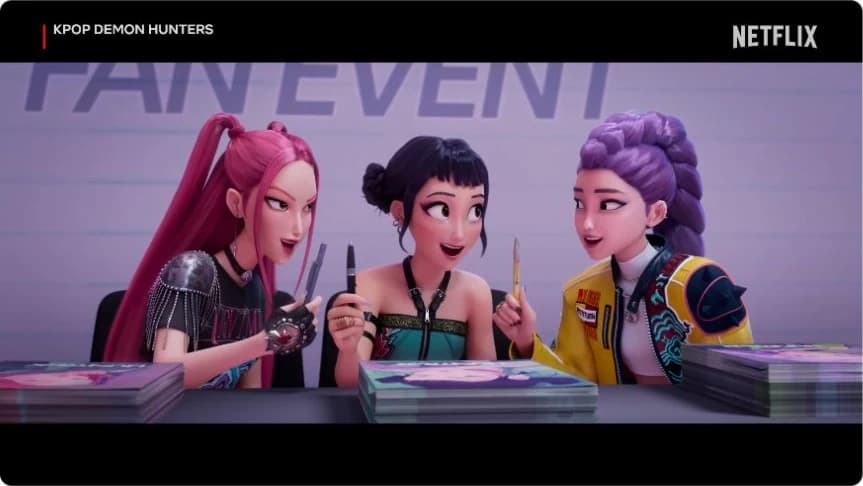
KPop Demon Hunters Script: A Scene and Shot Breakdown
Study a KPop Demon Hunters scene through an edited script reconstruction, timestamped shot observations, and practical lessons for writing public conflict.
How to Write a Micro-Drama Script: A First Episode, Step by Step
Write your first micro-drama episode with a complete original scene, a simple outline, a timed read-through and practical revision examples.
Vertical Drama Dialogue: How to Cut Exposition Without Losing the Story
Improve short-drama dialogue with three before-and-after scenes, distinct character voices, action-based subtext and a practical read-aloud edit.